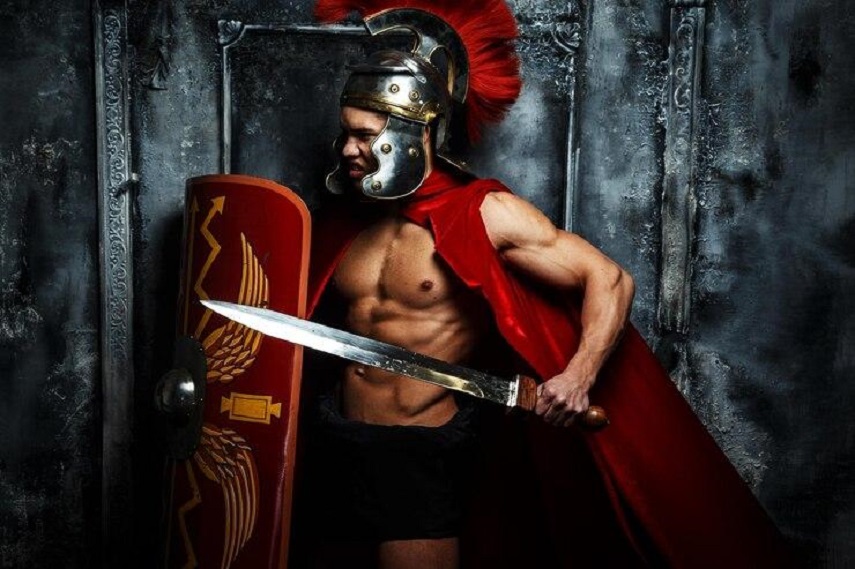
Short swords, with their compact yet potent form, stand as silent witnesses to the ebb and flow of human history, their blades having cut through the fabric of time across diverse civilizations. In this exploration of “Short Swords,” we embark on a journey that unveils the elegance, functionality, and cultural significance encapsulated within these abbreviated weapons. From the swift and disciplined strikes of the Gladius in the arenas of ancient Rome to the symbolic honour embedded in the Scottish Dirk, each short sword carries a unique narrative.
Join us as we unsheathe the tales of these blades, delving into their historical contexts, varied designs, and the martial and cultural landscapes they have graced. This guide is an invitation to traverse the realms of craftsmanship, warfare, and tradition, revealing the enduring legacy of short swords throughout the annals of human civilization.
Comparing the Arming Sword and Longsword
Delving into the realm of medieval weaponry, the comparison between the Arming Sword and Longsword unveils a fascinating narrative of design nuances and functional disparities. The Arming Sword, characterized by its one-handed grip and versatile nature, stands as a symbol of chivalry and close-quarters combat. Its blade, typically measuring around 70 to 80 centimetres, allows for quick and precise strikes. In contrast, the Longsword, with a lengthier blade ranging from 80 to 120 centimetres, embraces a two-handed grip, emphasizing power and extended reach. The Arming Sword excels in agility and adaptability, suited for rapid engagements, while the Longsword’s design prioritizes leverage and force, making it formidable in both offence and defence.
In the world of search engines and historical enthusiasts alike, understanding the distinctions between these two iconic swords is crucial. Whether you’re a collector, martial artist, or simply captivated by medieval history, recognizing the unique features of the Arming Sword and Longsword enriches your appreciation for the diverse weaponry forged throughout the ages. Join us on a journey through time as we explore the intricacies that set these swords apart, each with its role in shaping the narratives of knights, warriors, and the evolving art of swordsmanship.
9 Different Types of Short Swords in 2024
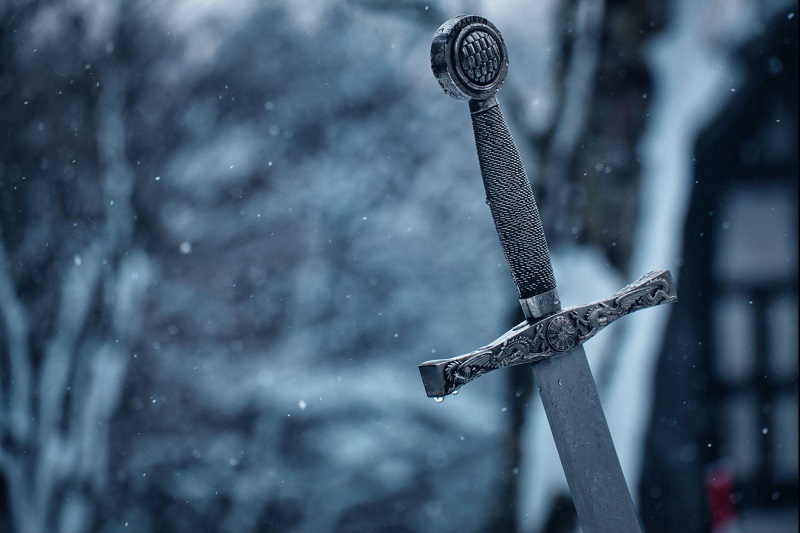
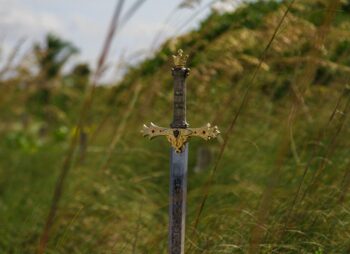
Short swords come in a diverse array of designs, each reflecting the unique characteristics of its cultural or historical origin. Here are some notable types of short swords:
1. Gladius (Rome)
The Gladius short sword, a quintessential symbol of ancient Roman martial prowess, encapsulates both historical significance and remarkable craftsmanship. Originating during the Roman Republic, the Gladius served as the primary weapon for Roman legionaries, earning its reputation on the battlefield for its efficiency in close combat. With a distinctive short, double-edged blade, the Gladius was strategically designed for quick and precise thrusts, making it a versatile and lethal tool for Roman soldiers.
Crafted from high-quality materials such as bronze or iron, the Gladius reflected the exceptional metallurgical skills of Roman swordsmiths. Its straight or slightly tapered blade profile allowed for adaptability in various combat scenarios, enhancing its effectiveness in the hands of highly disciplined Roman legions. Beyond its military utility, the Gladius became an enduring symbol of Roman might during conquests, leaving an indelible mark on ancient history.
In contemporary times, the legacy of the Gladius lives on, captivating enthusiasts, collectors, and history buffs alike. Its iconic form frequently appears in historical reenactments, and the sword’s influence extends to popular culture, featured prominently in movies and television productions set in ancient Rome. The Gladius, with its rich history and timeless appeal, continues to command attention, standing as a testament to the enduring legacy of short swords in the annals of human warfare and craftsmanship.
2. Dagger Short Swords
Dagger short swords represent a fascinating category of edged weapons, seamlessly blending practicality, symbolism, and historical significance. Characterized by their short and often double-edged blades, daggers have played diverse roles across cultures and periods. These compact weapons, typically measuring between 15 to 30 centimetres in blade length, have been utilized for self-defence, utility, and ceremonial purposes.
Historically, daggers have been an integral part of attire for various societies, serving as both tools and symbols of status or honour. The versatility of daggers lies in their suitability for close-quarters combat, making them effective weapons for personal defence. The design of the dagger allows for swift and precise thrusts, enhancing its effectiveness in confined spaces.
In different cultures, daggers have assumed unique forms, each reflecting the aesthetics and values of the society that crafted them. From the classic medieval rondel dagger to the ornate and symbolic ceremonial daggers of the Middle East, the dagger short sword has taken on diverse shapes and cultural meanings.
Today, dagger short swords captivate collectors, historians, and enthusiasts alike. Whether admired for their historical context, craftsmanship, or as elements of self-expression, these compact blades maintain a timeless appeal. From the intricacies of their hilt design to the artistry of their blades, dagger short swords remain a testament to the enduring fascination with edged weapons throughout human history.
3. Dirk
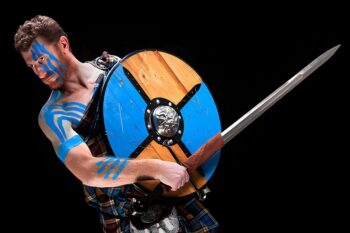
The dirk, a distinctive type of short sword, holds a special place in the rich tapestry of Scottish heritage and weaponry. Characterized by a single-edged blade and an ornate hilt, the dirk has historical roots that trace back to medieval times. Traditionally associated with Highland culture, the dirk served both practical and ceremonial purposes, symbolizing honour and status.
Typically featuring a blade length of around 12 to 24 inches, the dirk was designed for close-quarters combat, making it a reliable sidearm for Scottish warriors. Its ornate hilt often displayed intricate craftsmanship, showcasing the artistry and pride of the Highland clans. Beyond its martial utility, the dirk became an emblem of tradition, worn as part of the traditional Highland dress, especially during formal occasions.
Today, dirk short swords continue to evoke a sense of Scottish pride and cultural identity. Collectors and enthusiasts appreciate their historical significance, with modern reproductions often echoing the craftsmanship and symbolism of their medieval counterparts. The dirk, with its unique blend of functionality and tradition, stands as a testament to the enduring legacy of short swords in the broader context of weaponry and cultural heritage.
4. Kopis (Greece)
The Kopis, an ancient short sword with origins in ancient Greece, emerges as a distinctive and formidable weapon that reflects the martial prowess of Hellenistic warriors. Recognized for its distinct forward-curving blade, the Kopis offered a unique combination of cutting power and versatility on the battlefield. With a blade length typically ranging from 50 to 60 centimetres, the Kopis featured a single-edged, deeply curved design, facilitating powerful slashing attacks.
Designed to excel in both cutting and thrusting, the Kopis was an effective tool for Greek soldiers, providing them with a versatile weapon for close-quarters combat. Its innovative design allowed for efficient slicing while retaining the ability to deliver piercing thrusts, making it a valuable asset in ancient warfare.
Beyond its functional attributes, the Kopis carried cultural significance, representing the martial spirit of ancient Greece. The distinct curvature of its blade and its historical impact on battlefield tactics make the Kopis a fascinating subject for historians, collectors, and enthusiasts seeking a deeper understanding of ancient weaponry. Today, replicas and historical reconstructions of the Kopis continue to captivate those interested in the intersection of art, warfare, and the enduring legacy of short swords in ancient civilizations.
5. Sax (Viking)
The Sax, a notable short sword hailing from the Viking Age, stands as a testament to Norse craftsmanship and the pragmatic ingenuity of its seafaring wielders. Characterized by a single-edged blade with a distinct curve, the Sax typically measures between 30 to 60 centimetres in length. Its design, featuring a short and robust blade, was well-suited for both utility tasks and close combat scenarios.
Functioning as a versatile tool for daily activities such as cutting, hunting, and woodwork, the Sax seamlessly transitioned into a formidable weapon when the need arose. The curvature of the blade allowed for effective slicing and thrusting motions, showcasing its adaptability in Viking-age combat.
Beyond its utilitarian role, the Sax held cultural significance in Norse society. Often accompanied by intricate hilt designs and occasionally featuring precious metals or stones, the Sax served not only as a practical tool but also as a symbol of status and identity.
In contemporary times, the Sax short sword continues to captivate historians, collectors, and enthusiasts, providing a tangible link to the Norse maritime heritage and the multifaceted role of short swords in the daily lives and martial traditions of the Vikings.
6. Wakizashi (Japan)
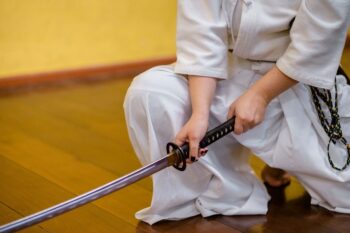
The Wakizashi, a traditional Japanese short sword, embodies the rich heritage and martial traditions of Japan. Typically measuring between 30 to 60 centimetres in blade length, the Wakizashi is renowned for its role as the companion sword to the longer Katana, forming the iconic daisho pairing worn by samurai. Characterized by a distinctive curved blade and a single-edged design, the Wakizashi excels in swift, precise strikes.
Crafted by skilled Japanese swordsmiths using traditional methods, the Wakizashi’s blade is often forged from high-quality steel, with the hamon (temper line) adding both visual appeal and structural integrity. The short sword served various purposes, from self-defence to ceremonial rituals, reflecting the samurai’s code of Bushido.
Beyond its functional attributes, the Wakizashi holds cultural significance, symbolizing the honour and social status of its wielder. Samurai, bound by strict codes of conduct, considered the daisho pairing as an emblem of their identity and commitment.
In contemporary times, the Wakizashi remains a symbol of Japanese craftsmanship and martial heritage, captivating enthusiasts, collectors, and traditional martial arts practitioners. Its enduring legacy transcends time, offering a glimpse into the artistry and discipline deeply embedded in Japan’s historical and cultural tapestry.
7. Xiphos (Greece)
The Xiphos, a venerable short sword originating from ancient Greece, encapsulates the martial sophistication and classical aesthetics of Hellenistic warriors. Typically measuring between 30 to 60 centimetres in blade length, the Xiphos boasts a straight, double-edged blade with a leaf-shaped design. Crafted with precision by skilled Greek blacksmiths, the Xiphos served as a primary weapon for hoplites and infantry soldiers during the glory days of ancient Greek warfare.
Distinguished by its elegant yet lethal form, the Xiphos was adept at both slashing and thrusting manoeuvres, making it a versatile instrument on the battlefield. The leaf-shaped blade allowed for effective cutting, while the Xiphos’ agility made it suitable for the close-quarter combat characteristic of ancient Greek phalanx formations.
Beyond its role as a formidable weapon, the Xiphos carried cultural significance, symbolizing the martial ethos of ancient Greece. Often adorned with ornate hilt designs and considered a symbol of honour, the Xiphos represented the epitome of Greek craftsmanship and warrior virtue.
In contemporary times, replicas and historical reconstructions of the Xiphos continue to captivate enthusiasts, historians, and collectors alike, offering a tangible link to the legacy of ancient Greek warriors and the enduring allure of classical weaponry.
8. Katzbalger (German)
The Katzbalger, a distinctive short sword of German origin, encapsulates a unique blend of functionality and aesthetics. Characterized by a broad, double-edged blade with a distinctive S-shaped guard, the Katzbalger typically measures between 50 to 80 centimetres in length. Originating in the 16th century, this short sword was favoured by Landsknecht mercenaries during the Renaissance.
Designed for close combat, the Katzbalger’s sturdy construction and compact size made it ideal for the swift and dynamic fighting style of Landsknechts. The S-shaped guard provided hand protection while allowing for a quick draw from the scabbard.
Today, the Katzbalger remains an intriguing historical artefact, celebrated for its unique design and historical significance. Collectors, historians, and enthusiasts appreciate the Katzbalger not only for its martial utility but also for its contribution to the rich tapestry of European swordsmanship during a transformative period in history.
9. Cutlass
The cutlass, a renowned short sword with a distinctive curved blade, bears a legacy intertwined with naval history and swashbuckling tales. Typically featuring a slightly curved, single-edged blade, the cutlass gained prominence as a sailor’s weapon during the Age of Sail. With a blade length of around 60 to 80 centimetres, the cutlass was favoured for its versatility in close-quarters combat, making it a staple among sailors, pirates, and naval officers.
Characterized by its robust and effective design, the cutlass excelled in boarding actions and naval battles. Its curved blade allowed for powerful slashing manoeuvres, and the compact size facilitated ease of use in confined shipboard spaces.
Today, the cutlass remains an iconic symbol of maritime history and piracy, celebrated for its role in naval combat and seafaring lore. Collectors and enthusiasts appreciate the cutlass for its historical significance and its enduring place in the romanticized tales of high-seas adventures.
4 Key Features of Short Swords Before Buying
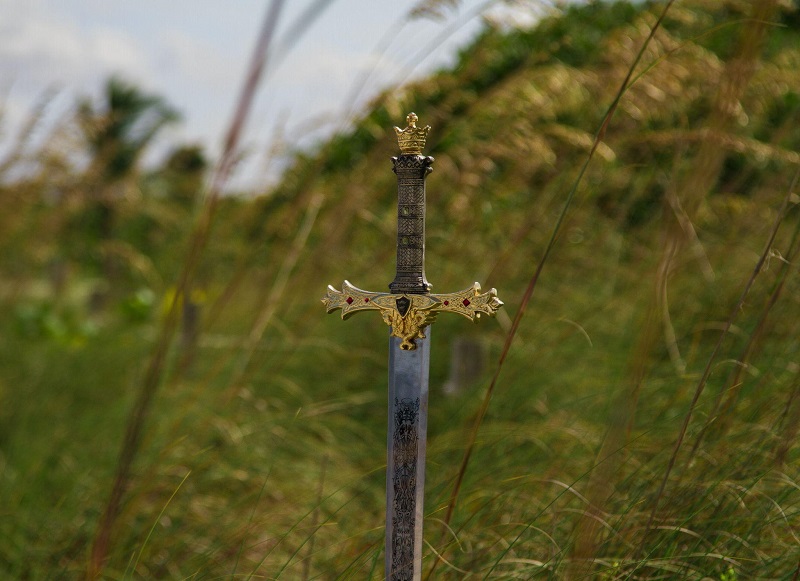
The crafting of early short swords by skilled swordsmiths was a meticulous process that hinged on utilizing available resources and contemporary technological advancements in hammering, forging, and tempering. This resulted in a set of overarching features that defined these weapons. Here, we outline the general characteristics of short swords, shaped by the ingenuity and craftsmanship of their creators.
Type of Steel
Bronze, prized for its hardening qualities under the hammer, was the material of choice for crafting the earliest short swords. The Greek xiphos, in particular, adhered to this tradition with its blades typically fashioned from bronze or iron due to their malleability, allowing for the creation of distinctive leaf-shaped forms.
- Soft Steel
During the early Iron Age, Celtic swords were crafted from a type of soft steel comparable to contemporary wrought iron, known for its relatively soft composition. Similarly, the Viking sax demanded only a modest quantity of iron but served a dual purpose, functioning both as a practical tool and a formidable combat weapon.
- Tamahagane Steel
Beyond Europe, Japanese swordsmiths skillfully forged the wakizashi using tamahagane steel, produced through the time-honoured method of smelting in a traditional furnace. Diverging from swords reliant on shields, the samurai sword offered a unique blend of defence and offence. Its hard cutting edge pliant, softer core conferred upon it the ability to adeptly both defend and attack.
- High-Carbon Steel or Damascus Steel
In contemporary times, reproductions of swords frequently showcase blades made of high-carbon steel or Damascus steel, renowned for their intricate Damascus patterns. It’s worth noting that replicas with stainless steel blades are primarily intended for decorative purposes and are not well-suited for parrying due to their design limitations.
Blade Appearance
Sword blades exhibited diverse shapes, ranging from straight to curved designs. Straight blades excelled in thrusting, whereas their curved counterparts were optimized for slashing manoeuvres. In earlier iterations, swords commonly incorporated raised central ridges to enhance structural robustness. However, as craftsmanship evolved, later swords embraced a weight-reducing approach through the incorporation of grooves or fillers. Explore the evolution of sword designs with our comprehensive guide.
Size And Length
The practical attributes of bronze or iron as materials probably imposed constraints on the length of early swords. Typically, short swords feature blades ranging from 30 to 60 centimetres, with the arming sword being an exception, boasting a usual blade length of approximately 70 to 80 centimeters.
Certain knives, such as the Viking sax, are sizeable enough to be categorized as short swords. The overall length of these short swords can vary, with some serving as one-handed swords—like the arming sword—while others accommodate the use of both hands. Explore the nuanced dimensions and functionalities of short swords in our insightful guide.
Sword Mounting
Sword mounting, also known as scabbard or sheath attachment, is a crucial aspect of the overall design and functionality of a sword. This process involves securing the blade within a protective casing or scabbard, allowing for safe storage, ease of carrying, and efficient deployment. Sword mounting encompasses various components and considerations, contributing to both the practicality and aesthetics of the weapon. Scabbard Design, Hilt and Guard, Mounting Style, Belt Attachment, Cultural Variations.
Understanding the intricacies of sword mounting provides enthusiasts, collectors, and historians with valuable insights into the craftsmanship and functional design of these iconic weapons. Whether for practical use or as a symbol of cultural heritage, the art of sword mounting continues to captivate and reflect the rich diversity of bladed weaponry.
Short Swords In The Modern World
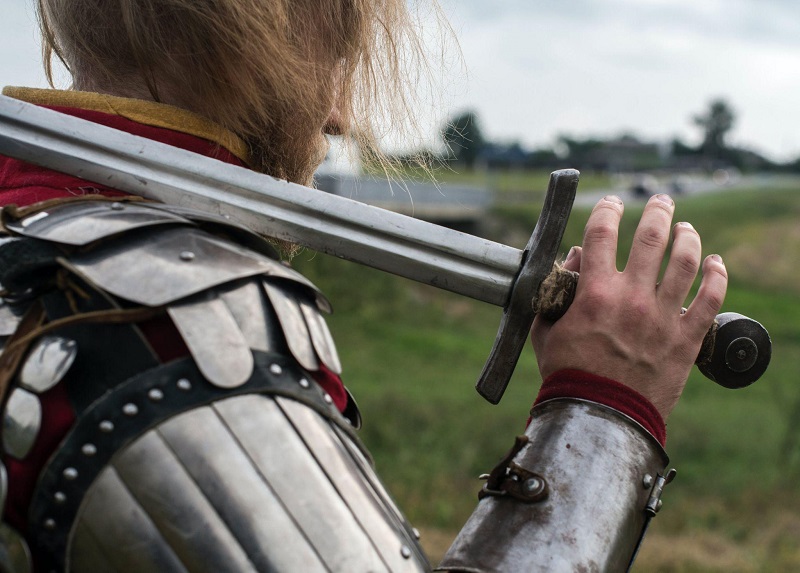
In modern times, short swords, though relics of bygone eras, continue to weave their legacy through a tapestry of cultural appreciation, ceremonial significance, and martial arts traditions. As collectables and antiques, short swords attract enthusiasts and collectors eager to embrace the craftsmanship and historical narratives encapsulated within these weapons. Beyond the confines of museums, these blades find purpose in ceremonial events and military traditions, symbolizing honour and prestige. From historical reenactments that breathe life into ancient battles to martial arts training that preserves centuries-old techniques, short swords persist as both educational tools and sources of physical discipline.
Moreover, the influence of short swords extends to the realms of popular culture, with movies, television productions, and video games featuring these weapons in epic tales of historical drama and fantasy. The artistry and functionality of short swords also inspire contemporary artisans and blacksmiths who craft custom designs, blending traditional techniques with modern materials. These creations stand as a testament to the enduring allure of these compact yet powerful instruments.
In outdoor pursuits, modern short swords, inspired by historical designs, serve as functional tools for camping and survival. Their durable construction and practical features cater to enthusiasts seeking a fusion of historical aesthetics and utilitarian design. Additionally, short swords maintain cultural symbolism in various regions, embodying values of honour and bravery. As artefacts and symbols, short swords seamlessly bridge the gap between history and the present, carving out a niche where tradition meets contemporary fascination. Whether as ceremonial items, tools, or collectables, short swords continue to carve a unique niche in the modern world, showcasing their timeless and multifaceted appeal.
Conclusion
In conclusion, the realm of short swords unfolds as a captivating journey through the annals of human history, blending artistry, functionality, and cultural significance. From the iconic Gladius of ancient Rome to the ceremonial Dirk of Scottish warriors, each short sword carries a unique narrative, reflecting the ingenuity and values of the civilizations that forged them. The evolution of these compact yet powerful weapons showcases the adaptability of human craftsmanship to the challenges of warfare, utility, and tradition.
Whether as symbols of honour, tools for survival, or artefacts of martial prowess, short swords have left an indelible mark on diverse cultures and epochs. Their enduring appeal, evident in contemporary collectables, reenactments, and martial arts practices, speaks to the timeless fascination with these blades. As we traverse the landscapes of history, the intricate designs and stories encapsulated within short swords continue to enrich our understanding of the human experience and the diverse ways in which we have navigated the challenges of our shared past.