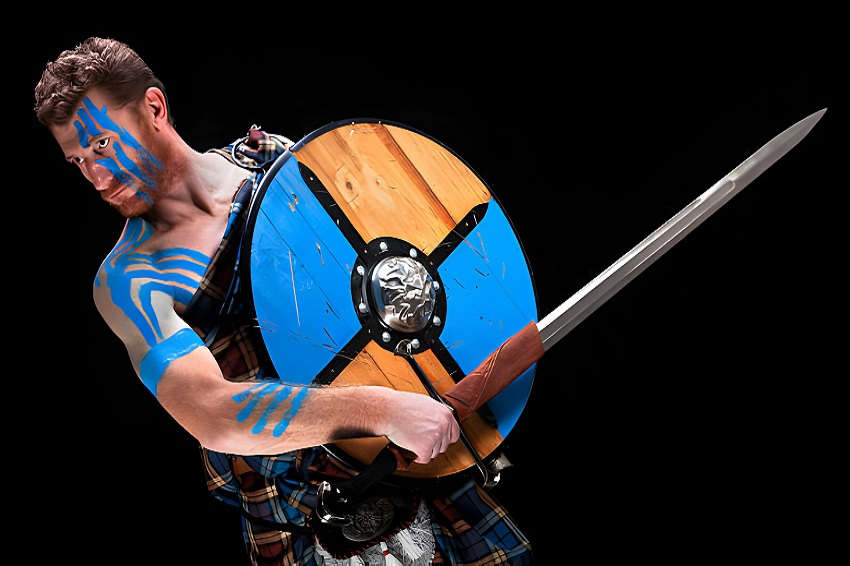
In the rich tapestry of history, certain weapons stand as iconic symbols of power, precision, and timeless craftsmanship. Among these, the Claymore sword emerges as a legendary blade that has etched its name into the annals of swordsmanship. With roots deeply embedded in medieval Scottish heritage, the Claymore is more than just a weapon; it is a testament to the artistry and strategic prowess of its time.
Join us on a journey back in time as we unravel the mystique surrounding the Claymore sword, exploring its origins, evolution, and the indelible mark it left on history.
From its distinctive design to the warriors who wielded it, this blog aims to shed light on the enduring allure of the Claymore, delving into the fascinating tales and historical significance that make it a captivating subject for enthusiasts and historians alike. As we traverse through the corridors of time, we’ll uncover the fascinating story behind this formidable weapon, examining the impact it had on battlefields and the lasting legacy it continues to embody in the realm of weaponry and martial history.
7 Different Types of Claymore Swords For Medieval
1. Early Claymore
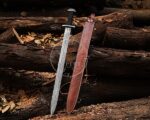
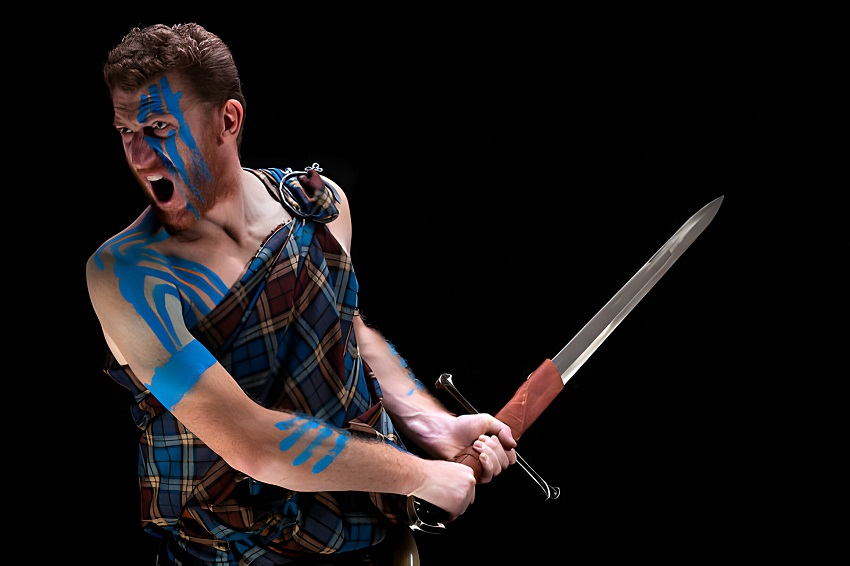
The Early Claymore, a pivotal chapter in the evolution of Scottish weaponry, traces its roots to the medieval period, capturing the essence of a bygone era. Characterized by a two-edged blade with a subtle taper towards the point, this iteration of the Claymore sword embodied simplicity and functionality. The hilt, featuring a basic crossguard with either straight or slightly curved quillons, complemented the straightforward design of the blade.
As a weapon of its time, the Early Claymore played a crucial role in the hands of Scottish warriors, showcasing a balance between cutting power and versatility. These swords, often wielded by Highland clans, served not only as symbols of martial prowess but also as reflections of the craftsmanship prevalent in medieval Scotland. The Early Claymore laid the groundwork for the evolution of this iconic sword, leaving an indelible mark on history and contributing to the legacy of one of the most recognizable weapons in the world.
2. Flambard Claymore
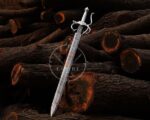
The Flambard Claymore, also known as the “Flame-bladed” Claymore, stands out as a captivating variation distinguished by its uniquely shaped blade. The sword’s edge, reminiscent of flickering flames, not only served an aesthetic purpose but also provided enhanced strength to the weapon. The intricate quillons, with sweeping curves and artistic detailing, added a touch of elegance to the Flambard Claymore. This distinctive design, popular in certain periods, showcased the craftsmanship of swordsmiths and contributed to the allure of this formidable blade. The Flambard Claymore remains a testament to the marriage of artistry and functionality in the evolution of medieval Scottish weaponry.
3. Schiavona Hilt Claymore
The Schiavona Hilt Claymore introduces a unique fusion of styles, combining the Scottish Claymore with the distinctive Schiavona hilt. Characterized by a basket-shaped guard adorned with intricate bars or mesh, this variant prioritized hand protection without compromising agility. The marriage of the robust Claymore blade with the elaborate Schiavona hilt resulted in a weapon that not only exuded aesthetic appeal but also showcased a pragmatic response to evolving combat needs. Renowned for its versatility and ornate design, the Schiavona Hilt Claymore exemplifies the ingenuity of weapon craftsmen and the adaptive nature of Scottish swordsmanship during its historical zenith.
4. Twisted-Hilt Claymore
The Twisted-Hilt Claymore stands as a testament to the masterful fusion of functionality and artistry in Scottish sword design. Distinguished by its hilt featuring a mesmerizing twisted or spiral pattern, this variant of the Claymore not only boasted a unique aesthetic but also showcased the skilful craftsmanship of its creators. The twisted-hilt design not only added a touch of sophistication but also served a practical purpose, enhancing the structural integrity of the sword. Beyond its utilitarian aspects, the Twisted-Hilt Claymore remains an exquisite example of how form and function converged to create a weapon that transcends the realms of mere tools and becomes a work of art.
5. Claybeg
The Claybeg, a compact yet resilient kin of the renowned Claymore, encapsulates Scottish swordcraft in a condensed form. Characterized by its smaller size, this variant retains the quintessential features of a two-edged blade and a modest hilt. Embracing versatility, the Claybeg served as a trusty companion for those seeking a weapon adaptable to diverse combat situations. Its agile design made it a popular choice for both self-defence and swift, close-quarters engagements. The Claybeg, with its succinct dimensions and unwavering functionality, stands as a testament to the ingenuity of Scottish swordsmiths, offering a compelling chapter in the broader narrative of medieval weaponry.
6. Hunting Claymore
The Hunting Claymore, a purposeful adaptation of its iconic predecessor, caters to both self-defense and the demands of the hunt. Distinguished by a broader blade with a pronounced curve, this variant seamlessly blends the elegance of traditional Scottish swordcraft with practicality. Crafted for versatility, the Hunting Claymore served as a reliable companion for individuals navigating the challenges of both battle and the wilderness. Its design, balancing cutting efficiency and multi-functionality, attests to the strategic considerations of those who wielded it. The Hunting Claymore, a testament to the symbiosis of form and function, underscores the adaptability inherent in the evolution of weaponry.
Key Features of the Claymore Scottish Swords
In modern times, claymore may imply either an Early Claymore or a Flambard Claymore. Here are the characteristics of the Claymore sword:
1. Type of Metal
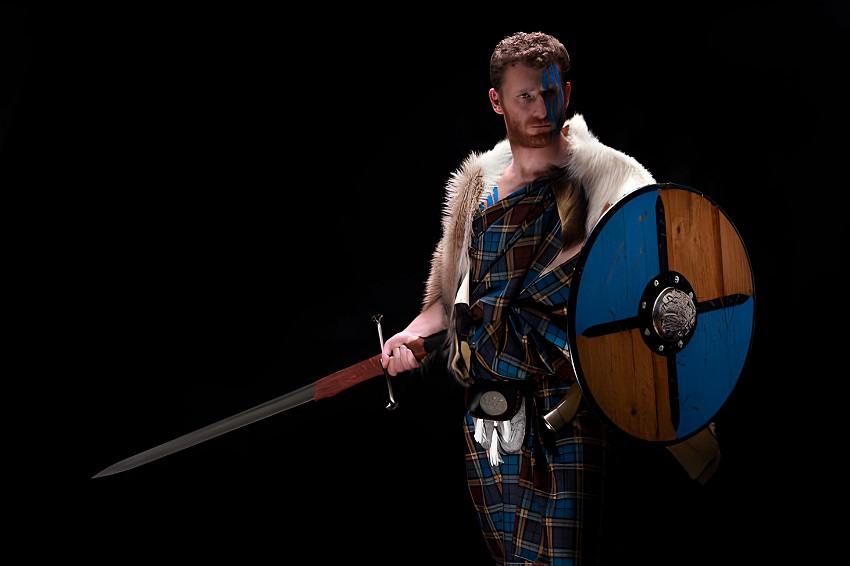
During the late 17th and 18th centuries, Scottish blades were frequently imported, primarily from German cities such as Passau and Solingen. The Claymore swords of this era boasted high-quality German steel blades, subjected to rigorous forging and tempering processes. Despite the reliance on imported blades, Scottish smiths and armourers played a crucial role by locally mounting these blades. In contemporary times, replicas of Claymore swords commonly utilize high-carbon steel blades, paying homage to the historical significance of the original craftsmanship while embracing modern materials for authenticity and durability.
2. Blade Appearance
Scottish two-handed swords are characterized by their considerable length, breadth, and double-edged design, enabling them to deliver potent and weighty strikes. These swords typically sport rounded tips on their blades. To balance the blade’s weight without compromising strength, many Scottish broadswords incorporate fullers – grooves or channels running along the length of the blade. This feature not only reduces the overall weight of the sword but also enhances its manoeuvrability, ensuring a harmonious combination of power and precision in the hands of those wielding these distinctive weapons.
3. Size and Length
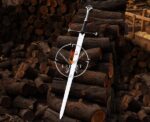
A typical Highland claymore boasts an overall length of approximately 140 centimetres, with a blade extending around 107 centimetres. Designed as a two-handed sword, it features a grip spanning about 33 centimetres. In contrast, the single-handed Scottish broadsword has an overall length of about 100 centimetres, with its blade typically measuring less than 90 centimetres. These dimensions reflect the distinctive characteristics of each weapon, showcasing the substantial size and extended reach of the two-handed claymore compared to the more compact and versatile single-handed broadsword.
4. Sword Mounting
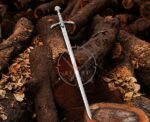
Sword mounting for the Claymore, a distinctive Scottish sword, encompasses a blend of functionality and artistic expression. The guard, situated between the blade and grip, plays a crucial role in protecting the wielder’s hand during combat. In the case of the Claymore, the guard often features a cruciform design, either straight or slightly curved, reflecting a balance between simplicity and effectiveness. The grip, typically crafted from materials like wood or leather, ensures a secure and ergonomic hold, allowing the wielder precise control over the formidable blade.
The pommel, positioned at the hilt’s end, serves a dual purpose in the Claymore’s mounting. Functionally, it acts as a counterbalance, contributing to the sword’s overall weight distribution. Aesthetically, the pommel often bears intricate detailing, showcasing the artistry of the weapon’s construction. Together, these mounting elements in the Claymore not only cater to practical considerations for combat but also embody the proud heritage and craftsmanship intrinsic to this iconic Scottish sword.
Conclusion
In conclusion, the Claymore sword stands as a testament to the rich tapestry of Scottish martial history, weaving together craftsmanship, innovation, and strategic design. From the iconic two-handed Highland claymore to the more nimble single-handed broadsword, each variant reflects a unique blend of form and function. The historical reliance on imported blades, especially from German forges, highlights the collaborative nature of weapon crafting during the late 17th and 18th centuries.
Today, replicas with high-carbon steel blades pay homage to the enduring legacy of these formidable weapons. Whether contemplating the imposing dimensions of the two-handed claymore or the versatility of the broadsword, the Claymore remains an enduring symbol of Scotland’s martial prowess, leaving an indelible mark on the annals of weaponry.